TL;DR: The electric guitar emerged in the early 1930s when inventors including Paul Tutmarc and George Beauchamp used electromagnetic pickups to amplify string vibration, and in 1955 Theodore McCarty of Gibson patented an adjustable bridge that let players customize their instrument's action and intonation for the first time. The original U.S. Patent Office drawing from that patent is available framed or unframed.
In 1946, Les Paul brought a solid-body electric guitar prototype to Gibson's headquarters. Gibson passed. The instrument looked strange, the executives were skeptical, and the established guitar market showed no obvious demand for something so radical. Three years later, Leo Fender began selling a similar solid-body design under the name "Esquire," and the instrument that Gibson had turned down became the defining sound of the second half of the 20th century. Gibson eventually built the Les Paul model in 1952, less than a decade after the rejection. The history of the electric guitar is full of moments like this: inventors ahead of institutions, solutions waiting for the market to catch up.
Paul Tutmarc and the First Electrified Guitar
The story of the electric guitar's invention begins, as many technological origins do, with parallel experiments happening at roughly the same time in different places. Paul Tutmarc, a musician and inventor working in Seattle in the late 1920s and early 1930s, is among the earliest figures to have built an electrified guitar. His design drew inspiration from the telephone, which converts sound vibrations into electrical signals through the interaction of a diaphragm and a magnet.

Tutmarc began with a Hawaiian lap steel guitar, a style played horizontally on the player's lap with a metal bar rather than the fretting hand. He built a magnetic pickup from horseshoe magnets and wire coils, placed beneath the strings, that could register the vibration of steel strings as changes in a magnetic field and convert those changes into an electrical signal. The signal could then be amplified and sent to a speaker. The principle was the same as the telephone; the application was music.
The pickup that Tutmarc constructed solved the central problem of acoustic guitars in large ensembles and noisy venues: volume. An acoustic guitar, however well-made, could not compete with a brass section or a full rhythm band. Amplification changed that constraint entirely.
Beauchamp, the Frying Pan, and Rickenbacker
Working independently on the same problem around the same time, George Beauchamp and John Dopyera were experimenting with electromagnetic pickups in California. Beauchamp, a musician, had the technical intuition that the pickup could work; Dopyera, an engineer, had the mechanical skill to build it. Their collaboration produced functional pickups, and Beauchamp took the next step: commissioning a craftsman to build a complete guitar around the pickup rather than retrofitting an existing acoustic instrument.

The resulting instrument, nicknamed the "frying pan" because of its circular body and long neck, is widely credited as the first purpose-built electric guitar. It was a lap steel, like Tutmarc's instrument, played horizontally. The body was not designed to resonate acoustically; it existed entirely as a housing for the pickup and strings. The guitar's sound came entirely from the electrical signal, not from the wood.

Beauchamp brought the prototype to Adolph Rickenbacker, a manufacturer with the production capacity to build instruments at scale. They formed a company and began producing the first mass-manufactured electric guitars, which carried the Rickenbacker name. Beauchamp filed a patent for the electromagnetic pickup in 1932, though the patent took years to be granted due to examiner skepticism that such a device could work as described.

The Spanish-Style Guitar and the Feedback Problem
The lap steel, for all its innovation, was a specialized instrument. Mainstream guitarists played in the Spanish style: guitar held vertically against the body, strings fretted with the left hand. As instrument makers began applying electromagnetic pickups to Spanish-style hollow-body guitars, a new problem emerged.
The hollow body of a traditional guitar, designed to resonate acoustically, became a liability when the instrument was amplified. At high volumes, the amplified sound from the speaker would cause the guitar's body to vibrate, which the pickup would detect and amplify further, creating a feedback loop. The result was an uncontrolled howl that made hollow-body electric guitars unusable above certain volume levels.

Les Paul identified the solution: eliminate the resonant body. If the strings and pickup were mounted on a solid block of wood rather than a hollow chamber, there was nothing to vibrate in response to the amplified sound. The feedback loop had no path. Paul built his first solid-body prototype in the early 1940s, informally called "The Log," by attaching strings and a pickup to a four-by-four piece of pine. The solution was as direct as it sounds.
Les Paul, Gibson's Rejection, and Leo Fender
Les Paul's approach to the solid-body problem was correct, but his timing was off relative to the market. When he brought his prototype to Gibson in 1946, the company's executives were not convinced there was demand for such an instrument. Gibson had built its reputation on high-quality acoustic and hollow-body guitars. A solid block of wood did not fit the aesthetic or technical tradition the company had built.

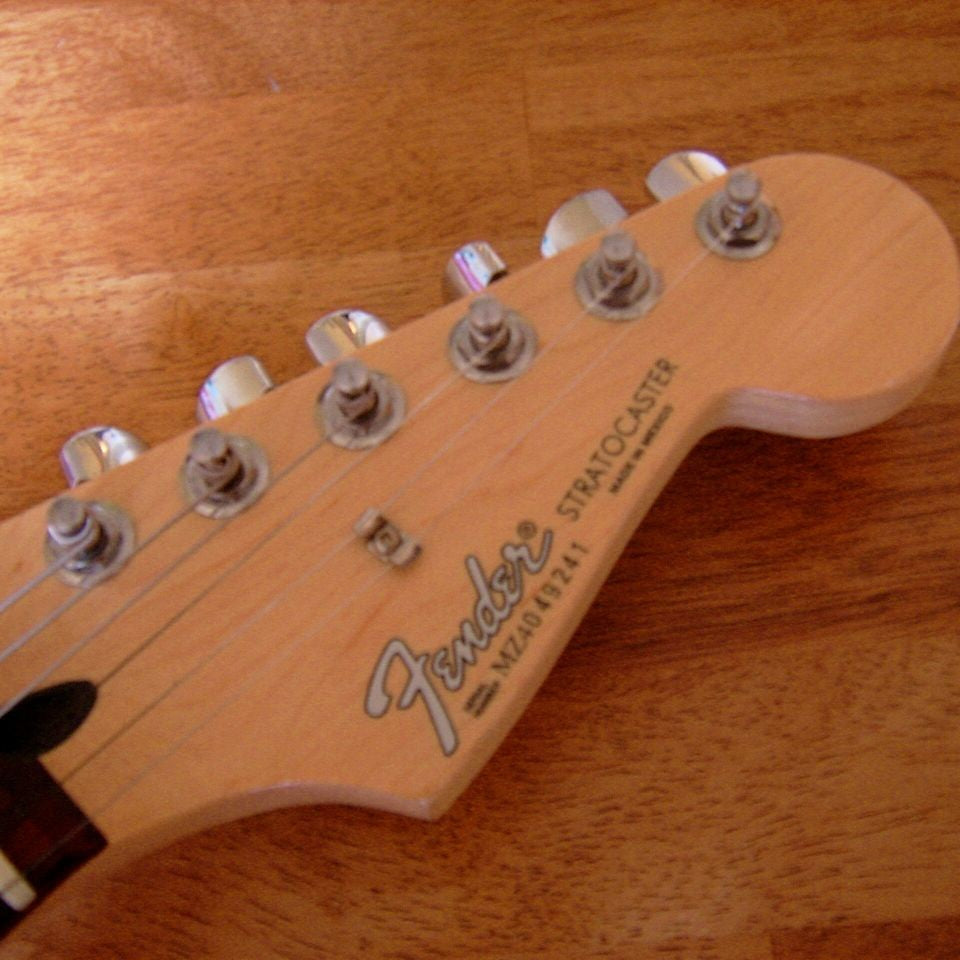
Leo Fender reached a different conclusion. Fender was not a guitarist; he was an engineer and electronics repairman who had spent years fixing amplifiers and understanding what musicians needed. In 1949, he began selling the Esquire, a simple solid-body electric guitar with a bolt-on neck, a design that was inexpensive to manufacture and easy to repair. When Gibson saw the Fender guitar gaining traction, the company reversed its position. By 1952, Gibson was selling the Les Paul model, named for the inventor it had turned away six years earlier.
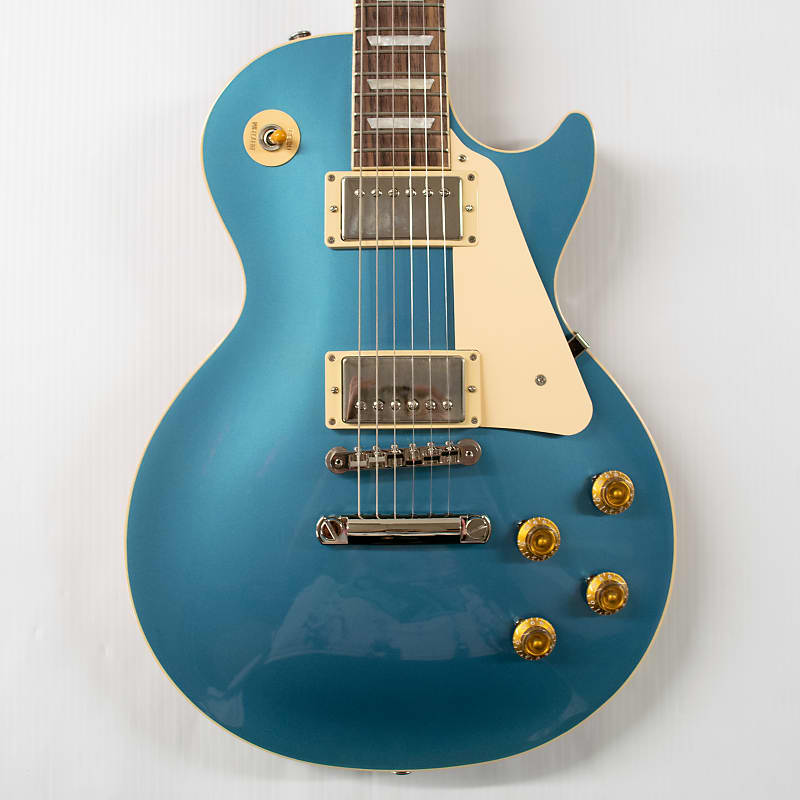
The two instruments defined the dominant poles of the electric guitar world: Fender's bolt-neck, single-coil clarity on one side; Gibson's set-neck, humbucking warmth on the other. Most electric guitars made since owe their design lineage to one or both of these instruments.
Theodore McCarty and the Adjustable Bridge Patent
In 1955, with the electric guitar established and sales growing rapidly, Theodore McCarty, then president of Gibson, filed a patent for a bridge design that addressed a practical problem players and manufacturers had been working around. The bridge on an electric guitar, the component that anchors the strings at the body end and transmits their vibration to the pickup, had been largely fixed in position. Players who wanted to adjust the action, the height of the strings above the fretboard, or the intonation, the accuracy of pitch across the full length of the neck, had limited options.
McCarty's patent covered an adjustable bridge that could be modified according to different playing styles and string gauges. Lower action favored fast lead playing; higher action suited heavier strings and more aggressive strumming. Intonation adjustment allowed the guitar to play in tune across all positions on the neck rather than only near the open strings. These were not cosmetic features. They were functional requirements for an instrument being played professionally across a range of styles.
The patent, credited to Gibson, expired in 1972 as the electric guitar's cultural dominance was fully established. McCarty's contribution was not the glamorous invention of a new instrument but the practical engineering that made existing instruments better suited to professional use.
The Electric Guitar in Culture
From the mid-1950s forward, the electric guitar's history is inseparable from popular music itself. Chuck Berry's driving rhythms, Jimi Hendrix's manipulation of feedback and distortion, Eric Clapton's sustain, Eddie Van Halen's tapping technique: each generation of players found new possibilities in the instrument that Beauchamp and Tutmarc had assembled from magnets and wire in the early 1930s.
The solid-body design that Gibson rejected in 1946 became the most commercially successful instrument format in popular music. The adjustable bridge that McCarty patented in 1955 became a standard feature on professional-grade guitars. The electromagnetic pickup that Beauchamp struggled to patent remained the fundamental technology underlying every electric guitar made since.
The patent drawings filed during this period are the engineering documents of a transformation: an instrument that expanded music's vocabulary more thoroughly than any invention since the piano.
Shop Electric Guitar Patent Art Prints
The original U.S. Patent Office drawing that defined the electric guitar. Starting at $49.99 unframed.
Electric Guitar (1955), Theodore McCarty
McCarty's 1955 patent for an adjustable guitar bridge, credited to Gibson, addressed the practical requirements of professional players who needed to set action and intonation for their playing style. This is the original engineering drawing from the U.S. Patent Office, filed at the moment when the electric guitar had just become the defining instrument of popular music. Works in a music room, studio, or any space where the history of the instrument matters as much as the instrument itself.
Best for: Guitarists, music history enthusiasts, studio owners, gift buyers for musicians

Frequently Asked Questions
Who invented the electric guitar?
Several inventors worked on the electric guitar independently in the early 1930s. Paul Tutmarc in Seattle built early electrified guitars using electromagnetic pickups inspired by telephone technology. George Beauchamp in California, working with John Dopyera, created what is widely credited as the first purpose-built electric guitar, the "frying pan" lap steel, and brought it to Adolph Rickenbacker for mass production. No single person invented the instrument; it emerged from parallel experiments solving the same problem of amplifying string vibration.
Why did Gibson initially reject the Les Paul guitar?
When Les Paul brought his solid-body prototype to Gibson in 1946, the company was skeptical that there was market demand for such a departure from acoustic and hollow-body designs. Gibson had built its reputation on instruments with resonant bodies, and a solid block of wood did not fit that tradition. After Leo Fender began selling solid-body guitars commercially in 1949, Gibson reversed its position and began producing the Les Paul model in 1952.
What did Theodore McCarty patent in 1955?
Theodore McCarty, then president of Gibson, patented an adjustable bridge design for electric guitars. The bridge could be modified to adjust the action, which is the height of the strings above the fretboard, and the intonation, which is the pitch accuracy across the full neck. These adjustments allowed players to customize the instrument for different playing styles and string gauges. The patent was credited to Gibson and expired in 1972.
What was the feedback problem with hollow-body electric guitars?
When a hollow-body guitar was amplified at high volume, the sound from the speaker caused the guitar's resonant body to vibrate. The pickup detected those body vibrations and fed them back into the amplifier, creating an uncontrolled loop that produced a loud, unmusical howl. Les Paul's solid-body design solved this by eliminating the resonant chamber entirely, so there was nothing to vibrate in response to the amplified sound.
What is the electric guitar patent art print?
The electric guitar patent art print is a reproduction of Theodore McCarty's 1955 U.S. Patent Office drawing for an adjustable guitar bridge, rendered in a watercolor style on museum-quality paper. It is available framed or unframed from Timeless Patents, and it is the original engineering document filed at a pivotal moment in the electric guitar's history, when the instrument had just established itself as the defining voice of popular music.
Written by Rider Tuff, founder of Timeless Patents. Timeless Patents makes museum-quality patent art prints from original U.S. Patent Office documents, celebrating the inventors behind your favorite sports, hobbies, and passions. Every print is available framed or unframed, starting at $49.99. Shop the full music collection →