TL;DR: The yo-yo is one of the oldest known toys, with origins in ancient Greece dating back over 2,500 years. In 1866, James Haven and Charles Hettrick of Cincinnati patented a "whirligig" that formalized the yo-yo's design in the United States, decades before Pedro Flores made it a national craze. Prints of the original patent are available framed or unframed.
In 1962, the Duncan Yo-Yo Company sold 45 million yo-yos in the United States. The country had only 40 million children. That is not a misprint. It means Duncan sold more yo-yos than there were kids to play with them, which suggests some adults were buying them too, and that the yo-yo had achieved a level of cultural saturation that very few toys ever reach.
The story of how a two-wheeled toy from ancient Greece became a mid-century American phenomenon, then fell into bankruptcy, then became a competitive international sport, is more interesting than the toy itself. And it begins not with the inventor most people credit, but with two men in Cincinnati who filed a patent three decades before Pedro Flores ever opened a factory.
Ancient Origins: Greece, China, and the Philippines
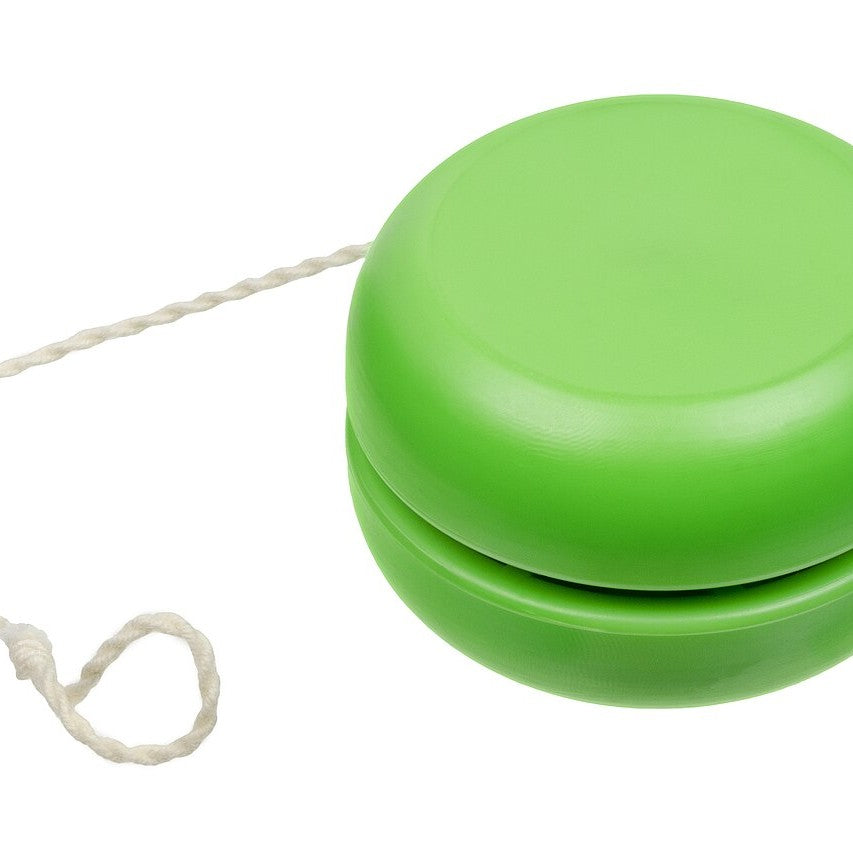
The yo-yo is one of the oldest manufactured toys in documented history. Artifacts from ancient Greece show painted terra cotta discs with a groove around the center and string attached, the unmistakable profile of a yo-yo. Greek children played with them as early as 500 BC, and some historians place the origin of the device even earlier. The Greeks made them from wood, metal, and terra cotta. The design was simple enough to produce from almost any material a craftsman had available.

In China, a similar toy was known as the "Eyes of the Moon." The Chinese version used a different string mechanism but operated on the same principle: a spinning disc descending and returning along a string held between two fingers. The toy appears independently in several ancient cultures, which suggests it was discovered rather than invented, a natural result of someone noticing that a disc with string attached could be made to spin and return.
The Philippines has a long documented history with the yo-yo as well, and Filipino craftsmen developed techniques that influenced the modern yo-yo's mechanism. The word "yo-yo" itself is believed to derive from a Filipino word, though historians debate its precise etymology. What is well established is that the toy was present in Filipino culture before it reached American manufacturers.
The 1866 Whirligig Patent: Haven and Hettrick
The first American patent covering the yo-yo concept was filed in 1866, long before the toy became a commercial phenomenon. James Haven and Charles Hettrick of Cincinnati, Ohio, filed a patent for a device they called a "whirligig." Their design covered a standard yo-yo with string: two weighted discs connected by an axle, with a looped string wound around the axle. The patent drawings show the essential mechanics that every yo-yo built since has followed.
Haven and Hettrick were not marketing a toy. They were formalizing a mechanism, placing a design on record with the U.S. Patent Office at a time when American patent law was still developing its framework for protecting toy and novelty inventions. Their 1866 filing predates Pedro Flores's work by more than 60 years and predates the Duncan Company by over 60 years.
Pedro Flores and the First American Factory
The yo-yo arrived in the American market in a recognizable commercial form in 1928, when Pedro Flores, a Filipino immigrant living in Santa Barbara, California, opened the Flores Yo-Yo Company. Flores had grown up playing with yo-yos and saw an opportunity in the American novelty market. His innovation was in manufacturing and distribution rather than in the toy's mechanics.

Flores's manufacturing operation grew quickly. Within a year, he was operating factories in Los Angeles and Hollywood in addition to Santa Barbara, producing tens of thousands of yo-yos per day. He organized yo-yo demonstration tours, hiring skilled players to perform tricks in public, which drove retail sales. The demonstrations were among the first organized experiential marketing campaigns for a toy in American history.
Donald Duncan and the National Craze
In 1930, Donald F. Duncan, Sr. purchased the Flores Yo-Yo Company and its trademarks. Duncan recognized that the yo-yo had broader market potential than Flores had captured. He expanded manufacturing, built a distribution network, and invested heavily in advertising and public demonstrations. By 1932, the Duncan Yo-Yo was a nationally recognized brand, and the company had placed the toy in Macy's Thanksgiving Day Parade, one of the highest-visibility advertising platforms available.

Duncan's aggressive defense of the "yo-yo" trademark gave his company a significant competitive advantage. By claiming the name itself as a brand, Duncan could prevent competitors from using the term in their marketing, forcing rivals to use alternative names for functionally identical toys. The strategy worked for decades.
By 1946, Duncan was producing 3,600 yo-yos per hour. The 1962 sales figure of 45 million units in a single year represented the peak of the company's market dominance. That same year, a court ruled that the term "yo-yo" had become a generic word and stripped the trademark from Duncan. Without exclusive rights to the name, the company could no longer prevent competitors from entering the market freely. Duncan filed for bankruptcy in 1965 after years of financial pressure from lower-cost competitors.
The Plastic Era and the Competitive Sport
The introduction of plastic yo-yos in the 1950s made the toy cheaper to manufacture and more durable than wooden models. Plastic allowed for more precise weight distribution and more consistent performance, which mattered as trick-based competition began to emerge.
The yo-yo's second major revival came in the late 1980s and early 1990s. New designs, particularly the ball-bearing axle introduced in the 1990s, allowed the yo-yo to spin for much longer periods, enabling tricks that were impossible with traditional designs. The first World Yo-Yo Contest was held in 1992, and the event has continued annually, growing into a genuinely international competition with thousands of participants.

Modern competitive yo-yo encompasses multiple divisions: 1A uses a single yo-yo, 2A uses two simultaneously, 4A involves catching and releasing an offstring yo-yo, and 5A attaches the yo-yo to a counterweight rather than the player's finger. These categories use equipment that would be unrecognizable to Haven and Hettrick but trace their lineage directly to the two-disc string toy they put on paper in Cincinnati in 1866.
The 1866 whirligig patent by Haven and Hettrick is the formal beginning of the yo-yo's American legal history. Two men who may never have imagined their device as a commercial product nonetheless created the document that started the chain: from a Cincinnati patent office filing to Pedro Flores's Santa Barbara factory to Duncan's national advertising campaigns to the World Yo-Yo Contest. A two-disc toy with a string, and the paper that first described it in American law.
Frequently Asked Questions
Where was the yo-yo invented?
The yo-yo has ancient origins in multiple cultures, with the earliest documented evidence from ancient Greece around 500 BC. Similar devices appear independently in China and the Philippines. The word "yo-yo" is believed to derive from a Filipino word, and Filipino craftsmen are credited with developing techniques that influenced the modern yo-yo's design. The first American patent covering the yo-yo mechanism was filed in 1866 by James Haven and Charles Hettrick of Cincinnati, Ohio.
Who popularized the yo-yo in the United States?
Pedro Flores, a Filipino immigrant, opened the first American yo-yo manufacturing company in Santa Barbara, California, in 1928. Donald Duncan purchased the company in 1930 and expanded it into a national brand. Duncan's aggressive marketing, including public demonstrations and the Macy's Thanksgiving Day Parade, made the yo-yo a household toy by the early 1930s.
Why did the Duncan Yo-Yo Company go bankrupt?
Duncan filed for bankruptcy in 1965 after a court ruled in 1962 that the term "yo-yo" had become a generic word and stripped the company's trademark. Without exclusive rights to the name, competitors could freely use the term "yo-yo" on their products, undermining Duncan's competitive advantage. The company could not sustain its market position against lower-cost competition.
When did yo-yo become a competitive sport?
The first World Yo-Yo Contest was held in 1992. Competitive yo-yo has grown into an international sport with multiple divisions including single-yo-yo freestyles, two-handed play, offstring, and counterweight techniques. Modern competitive yo-yos use ball-bearing axles that allow extended spinning times far beyond what traditional designs could achieve.
Written by Jackie Crino, owner of Timeless Patents. Timeless Patents makes museum-quality patent art prints from original U.S. Patent Office documents, celebrating the inventors and designs behind the objects we grew up with. Every print is available framed or unframed. Shop the full collection →